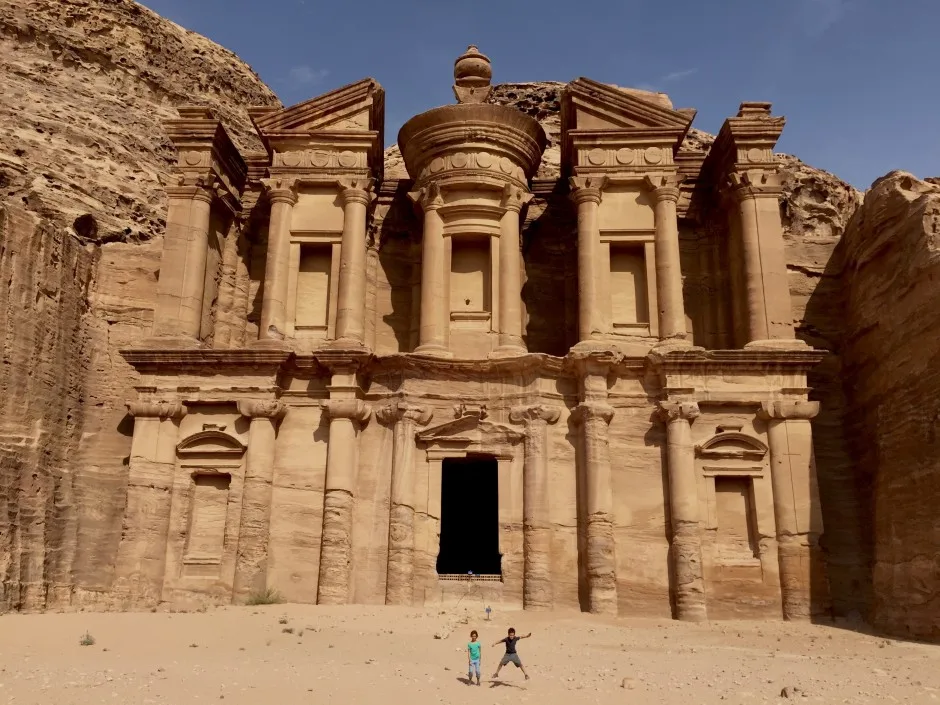
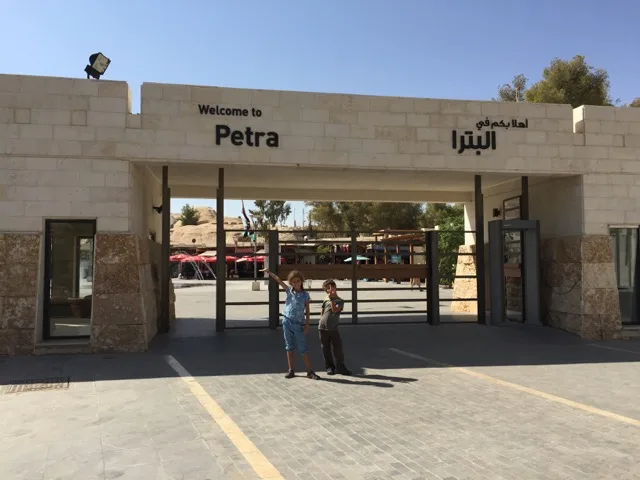
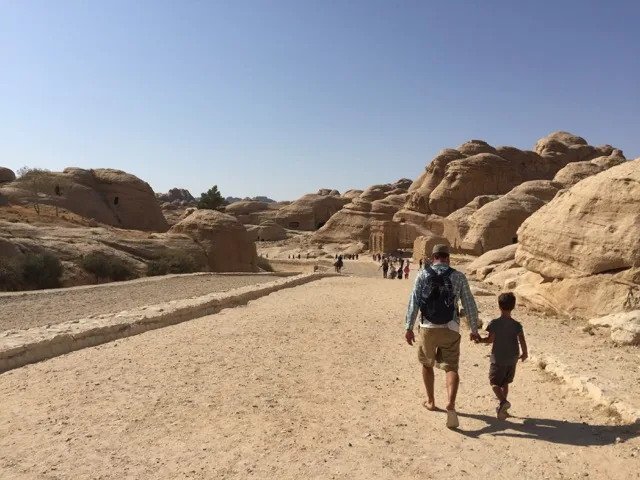
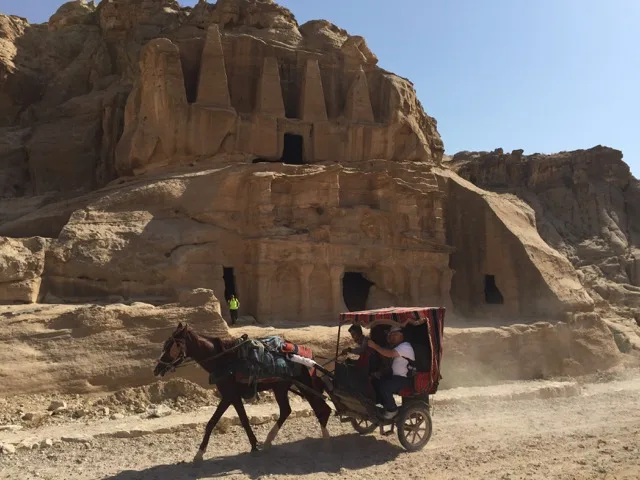
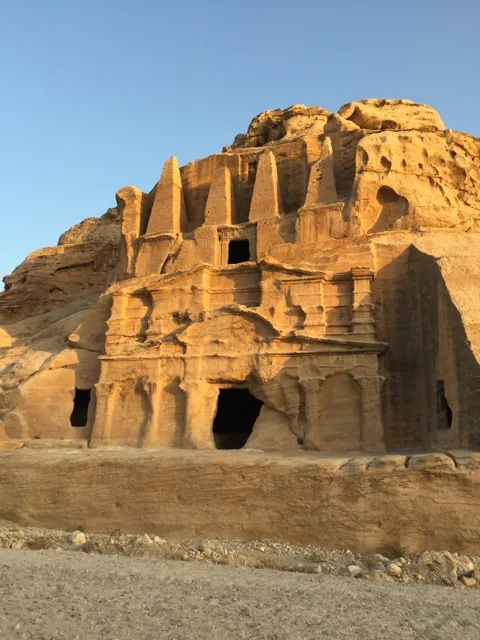
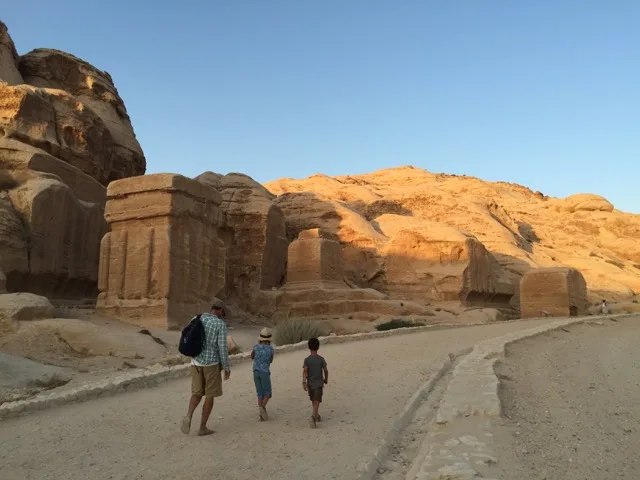
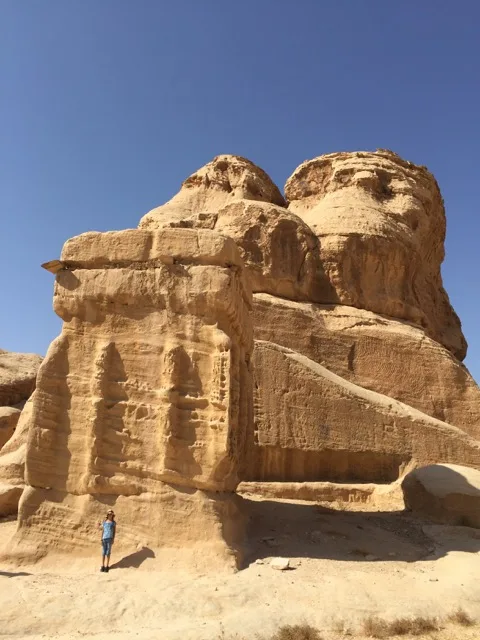
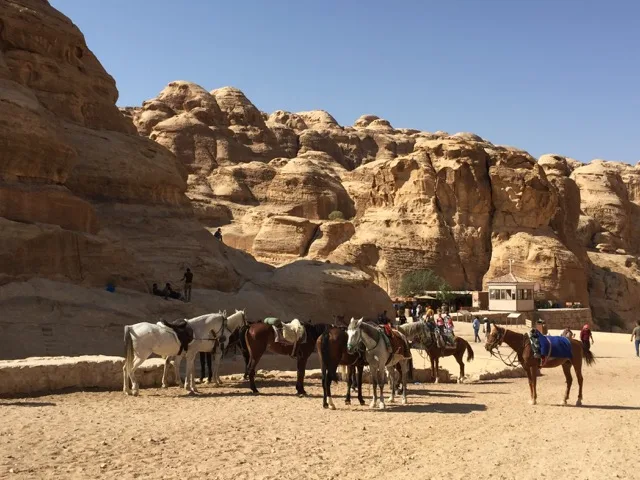
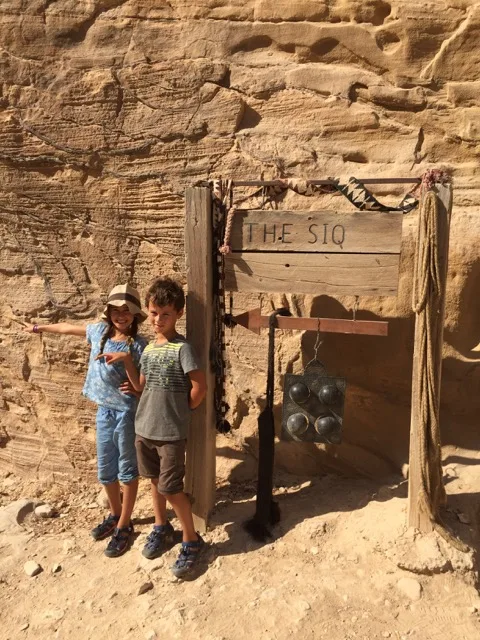
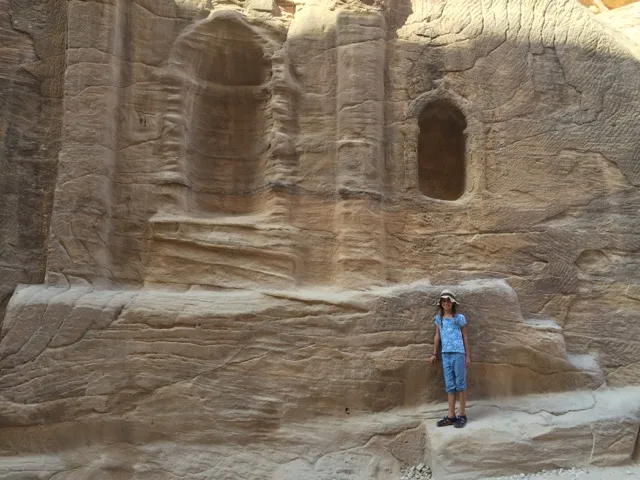
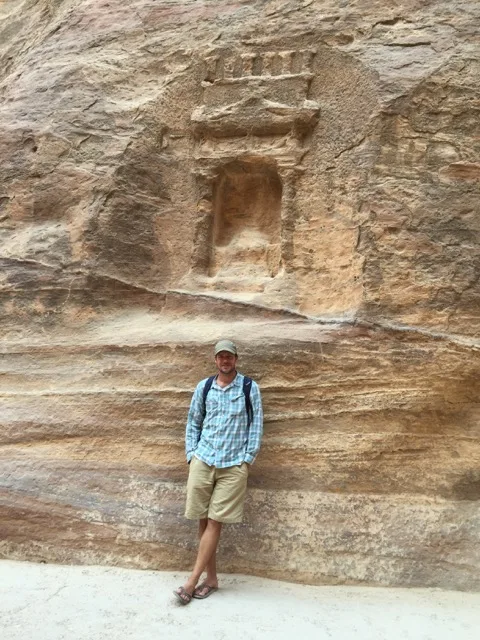
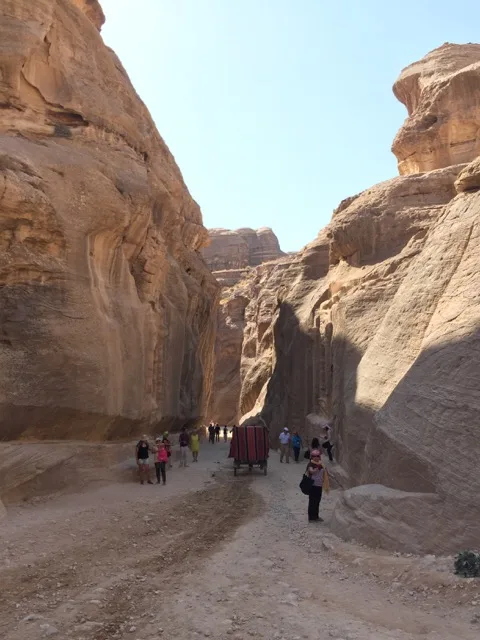
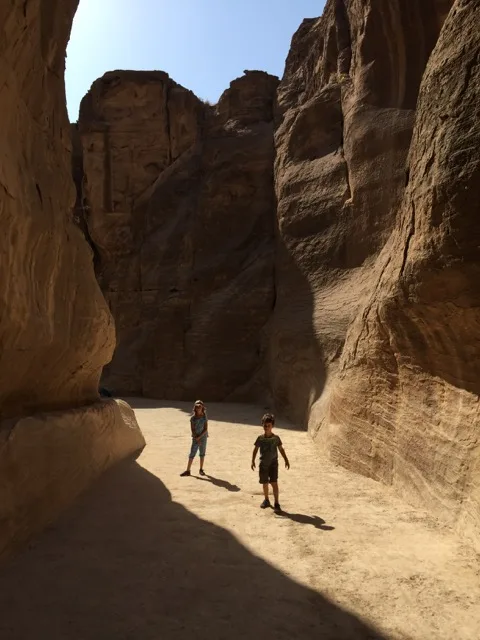
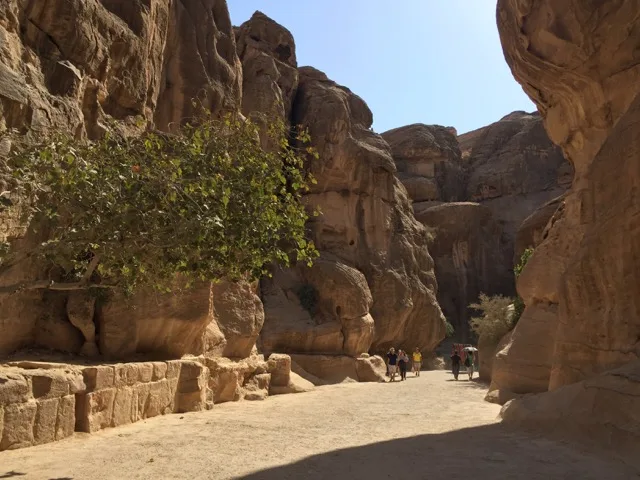
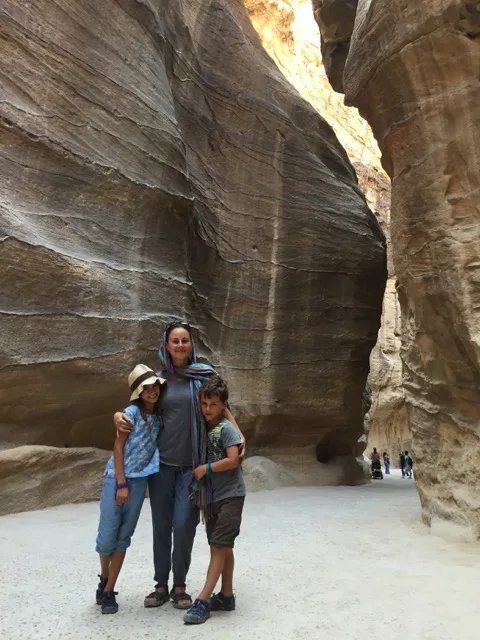
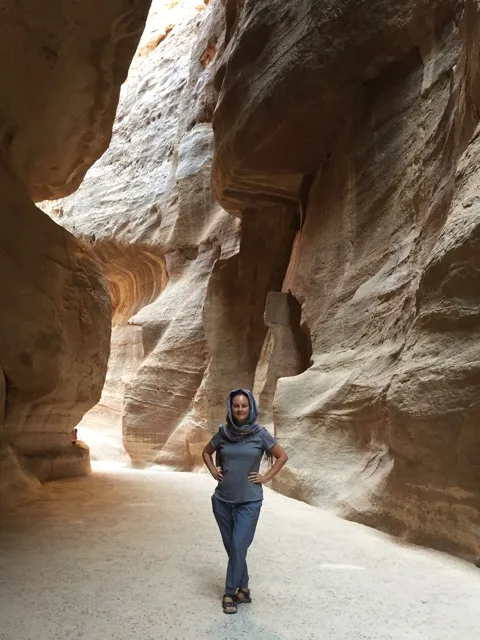
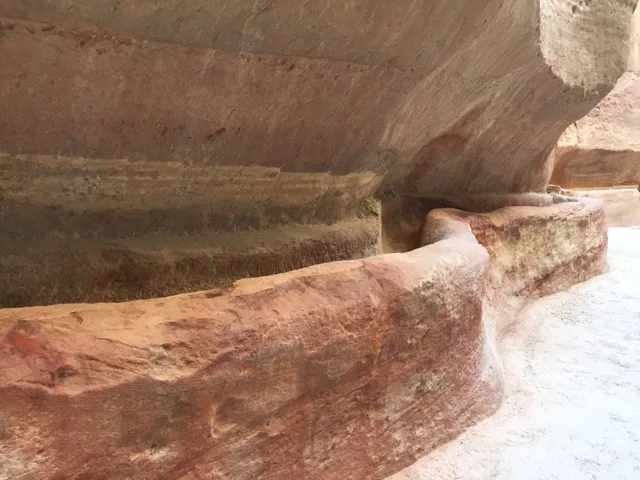
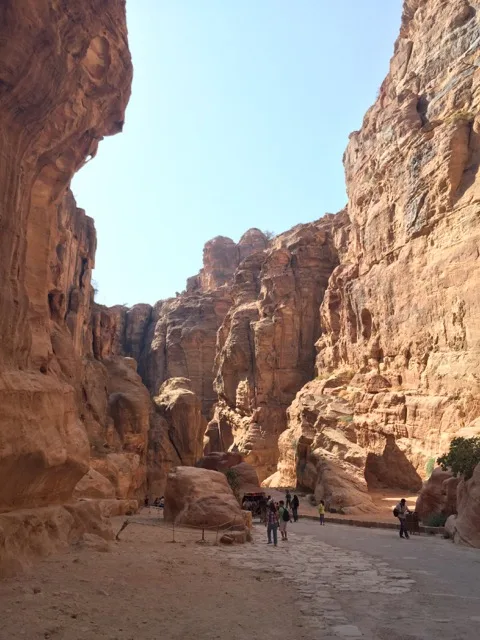
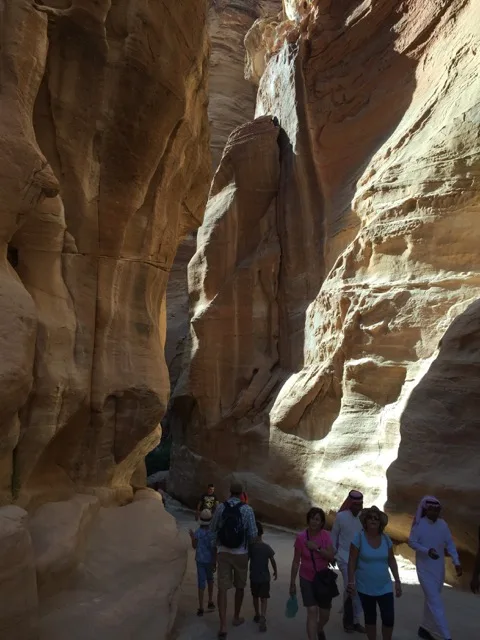
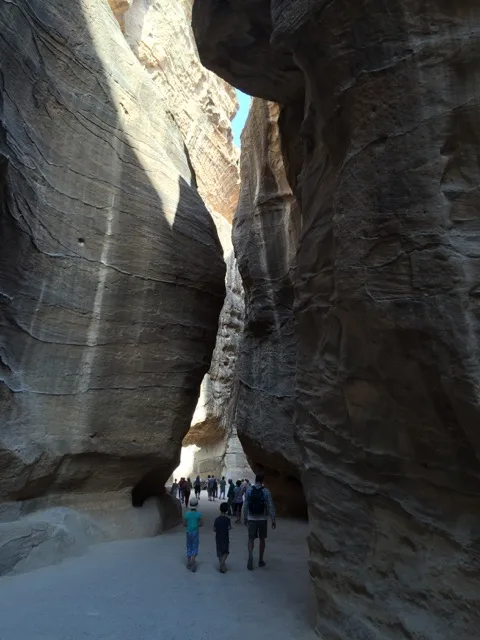
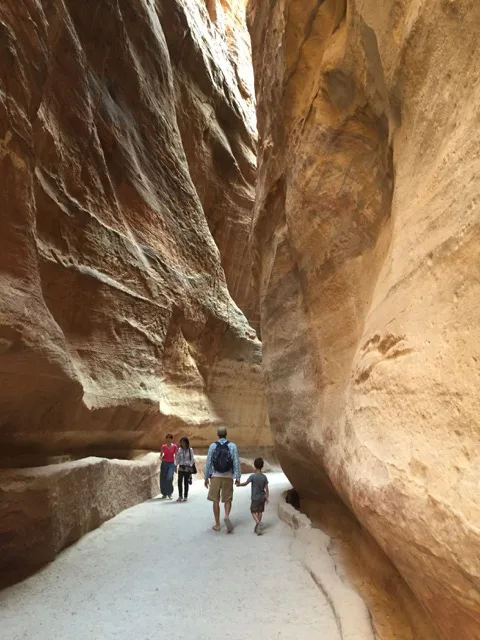
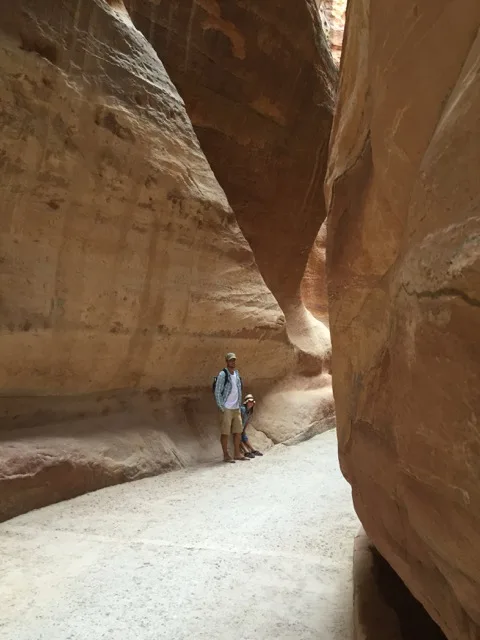
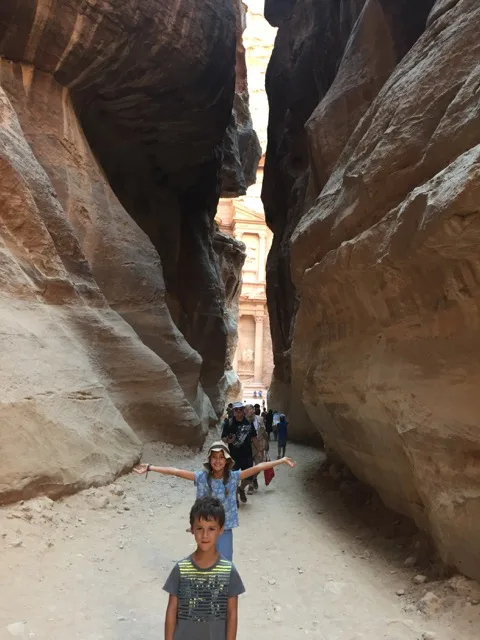
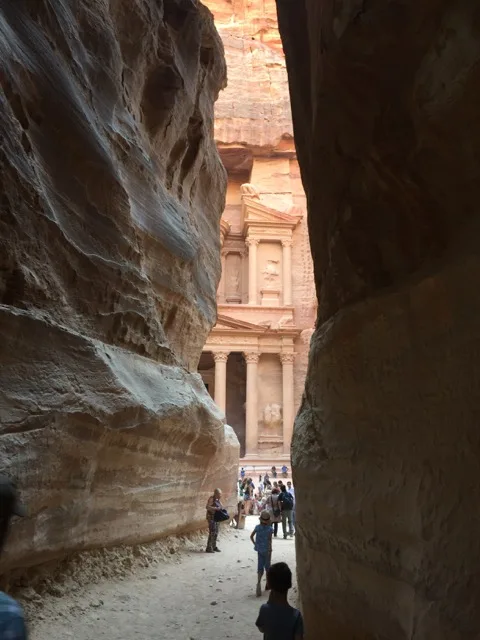
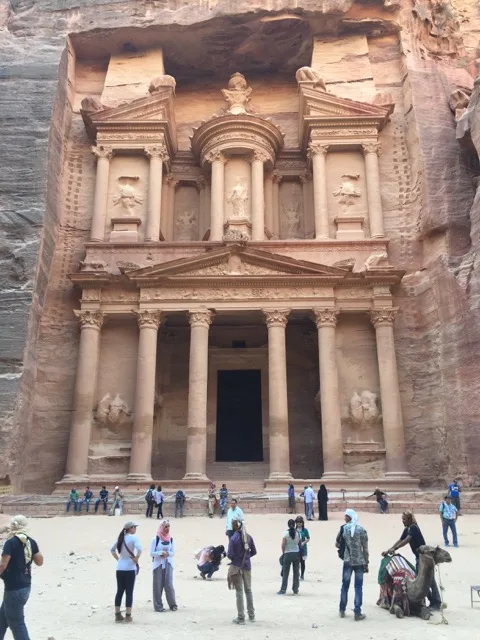
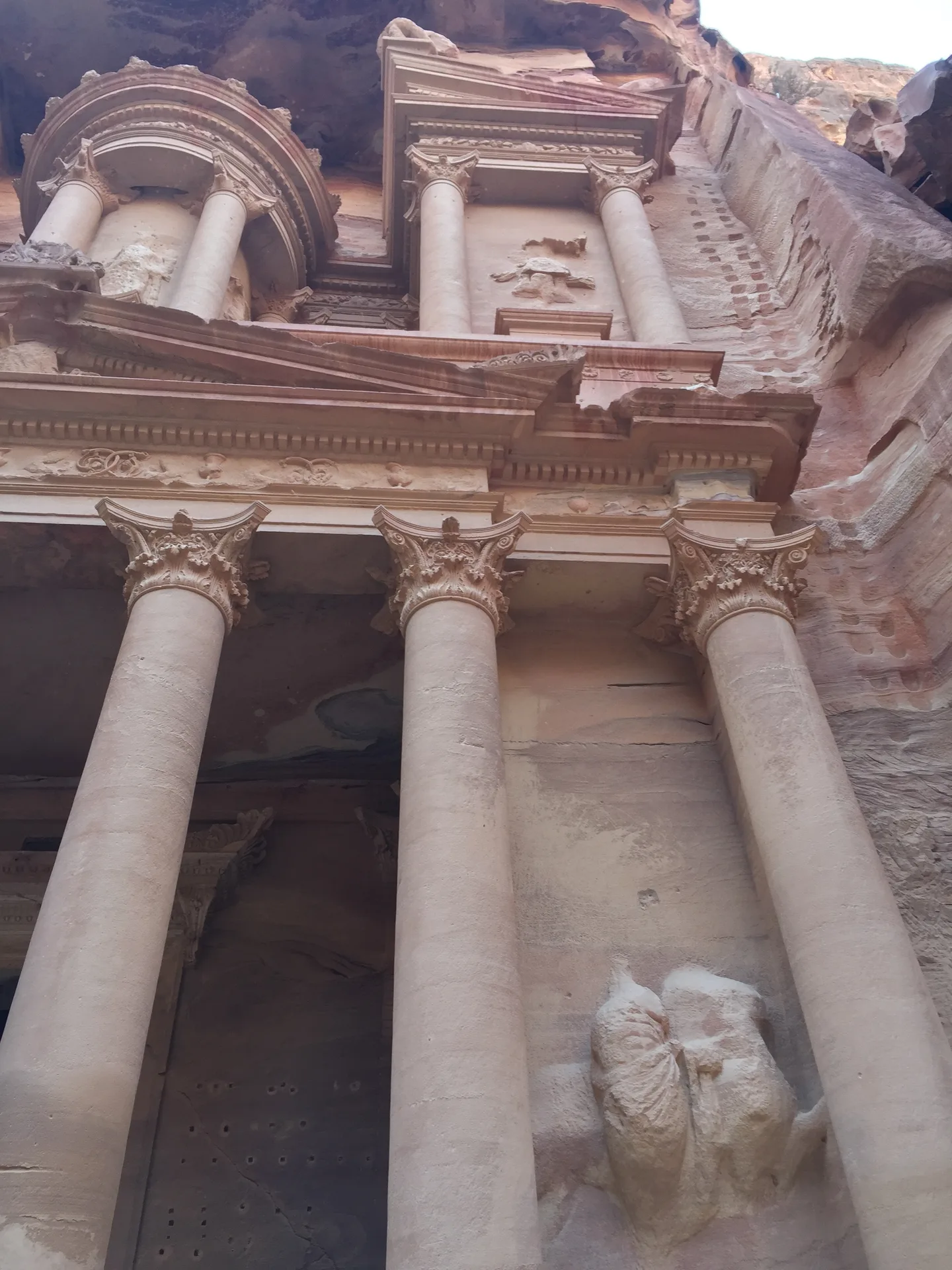
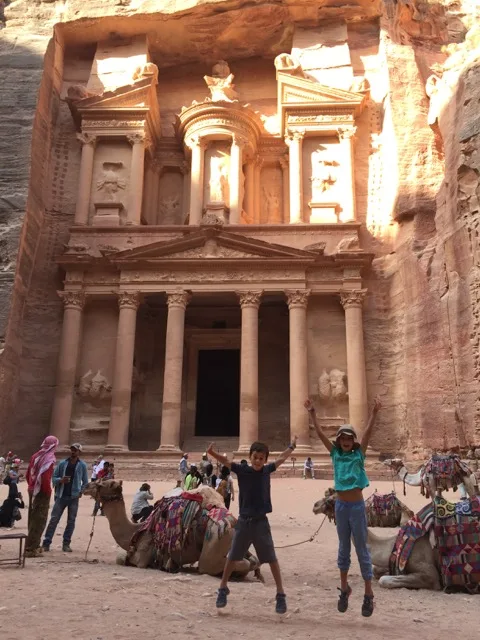
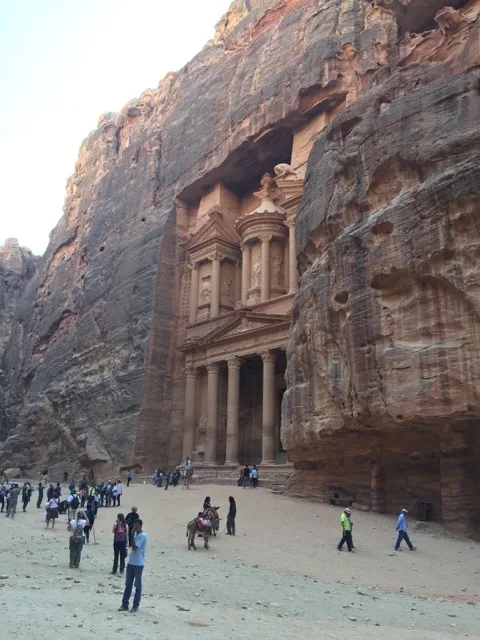
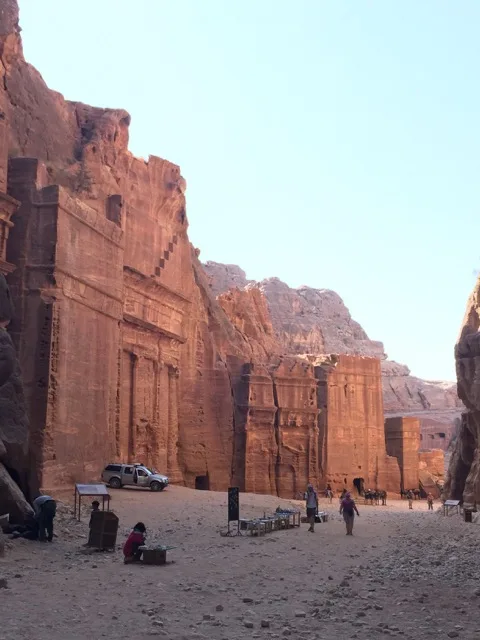
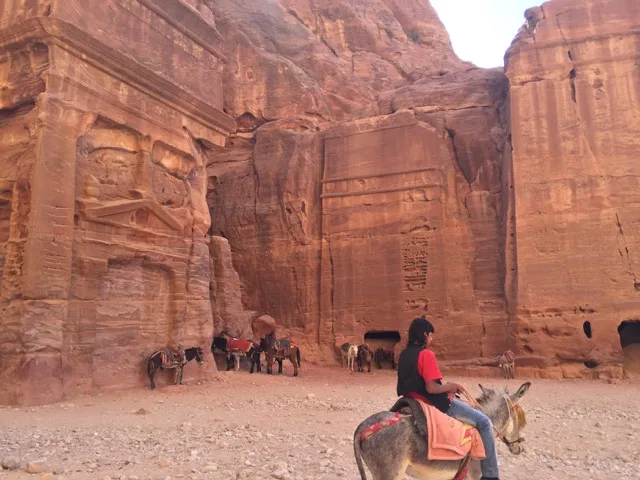
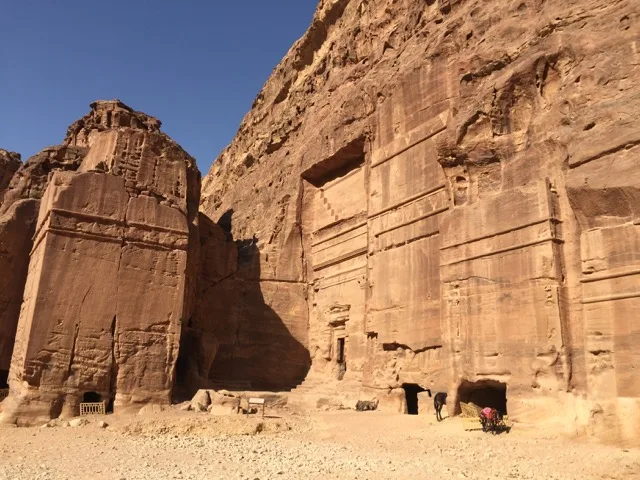
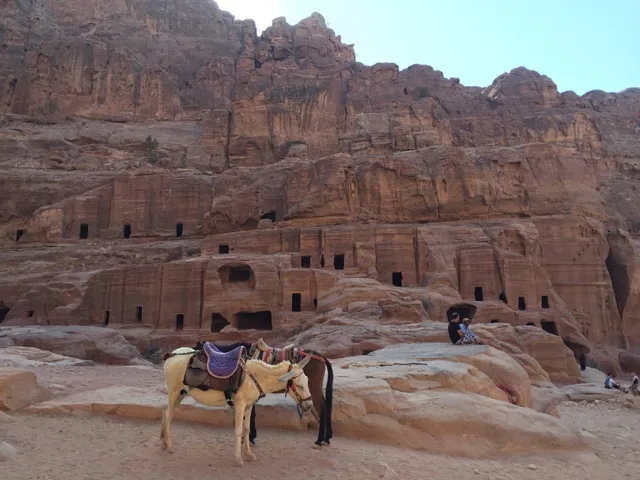
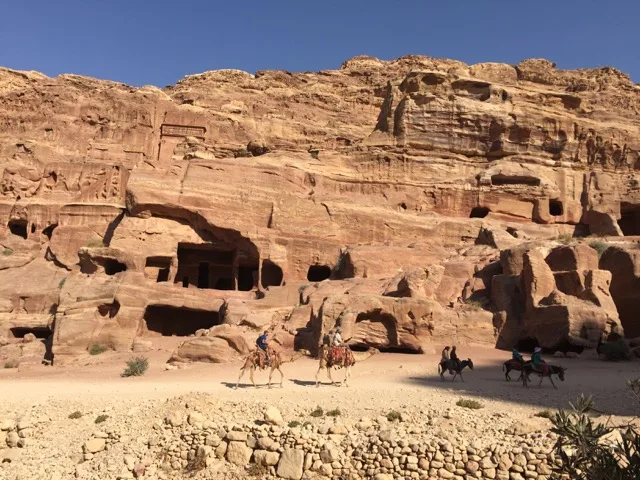
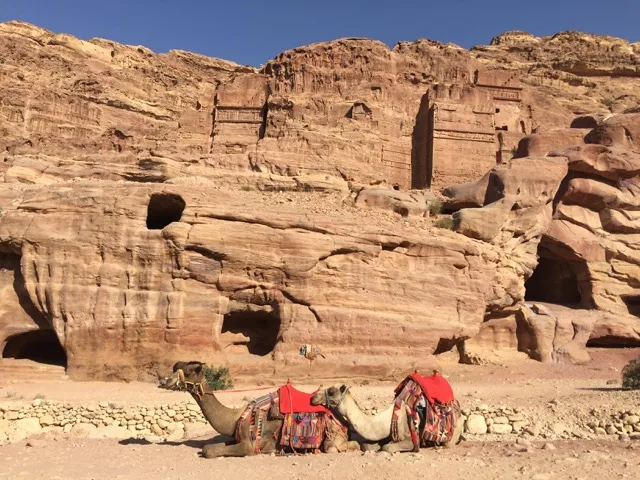
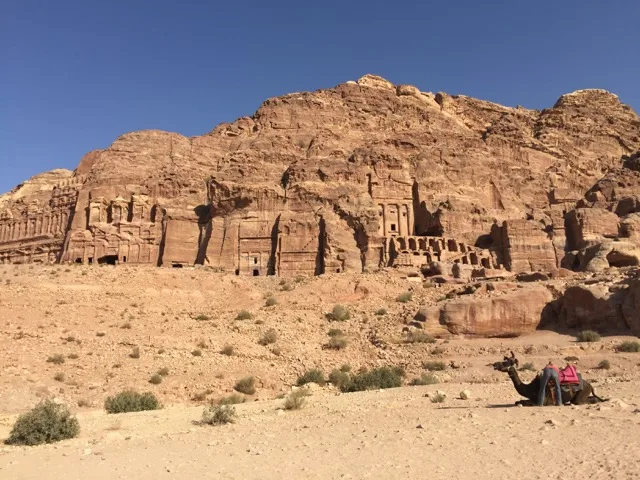
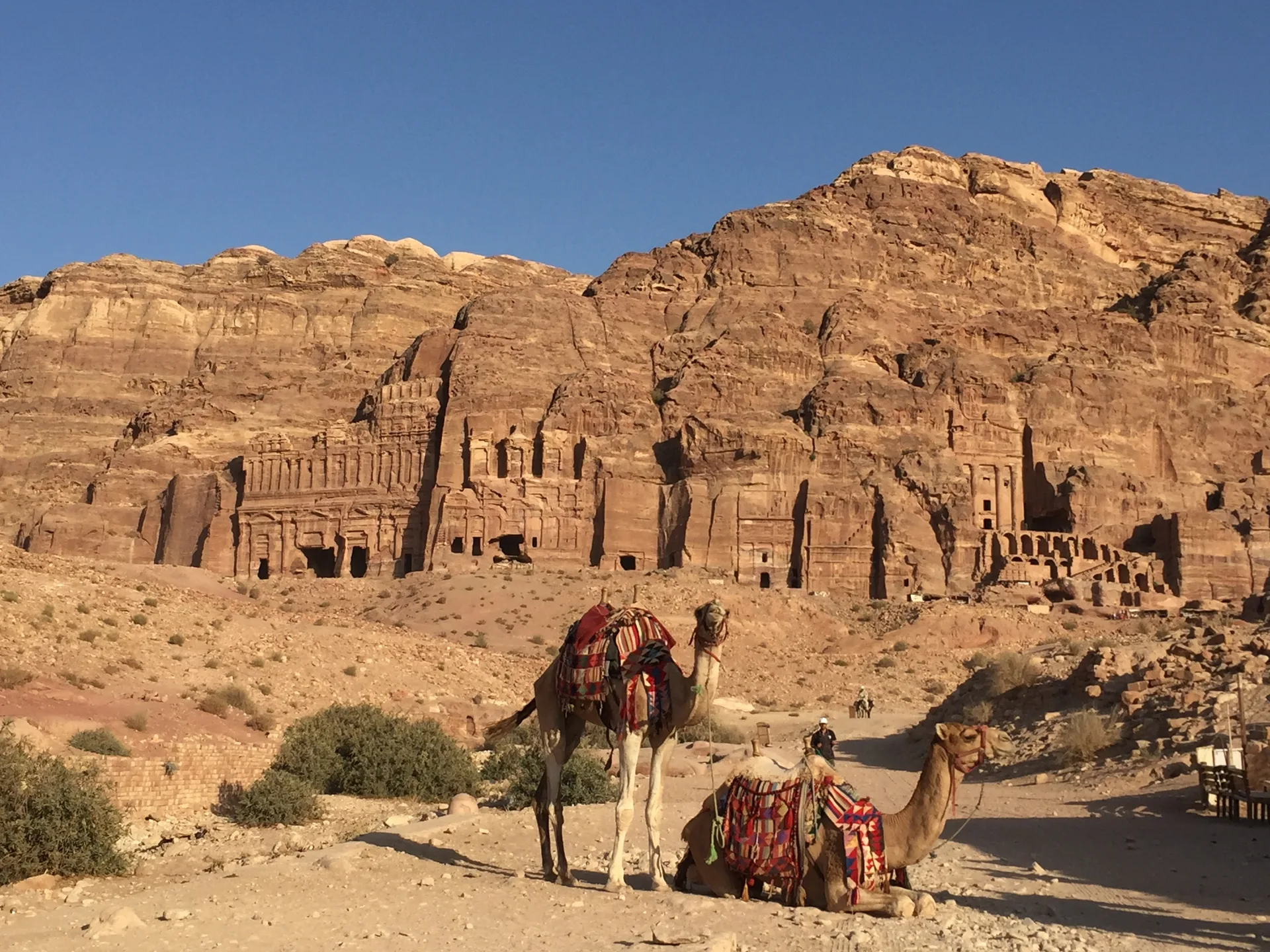
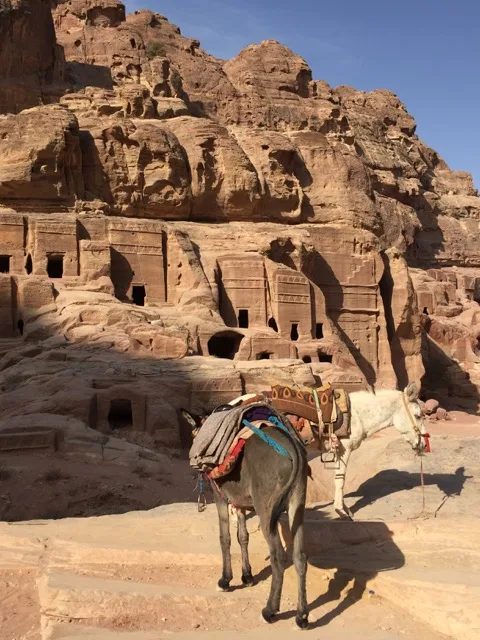
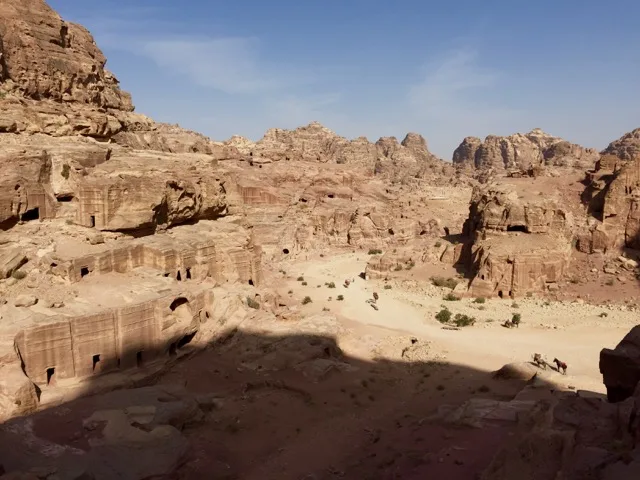
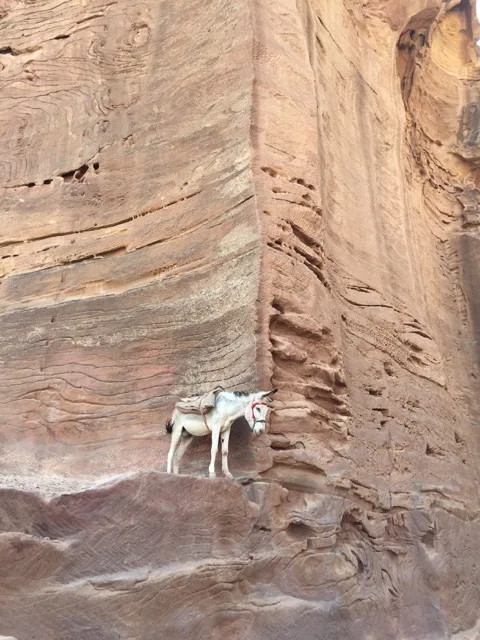
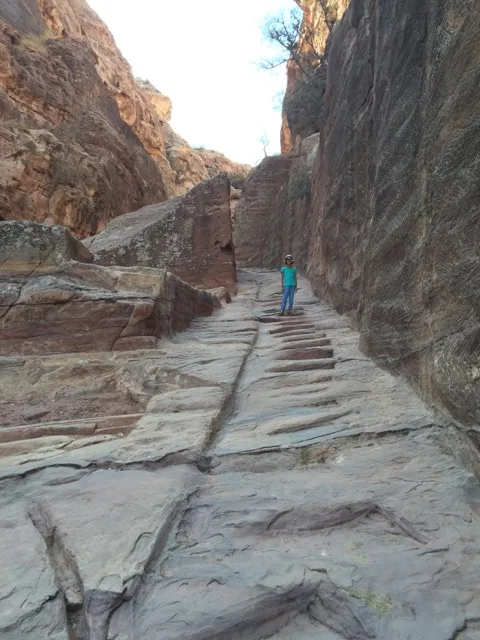
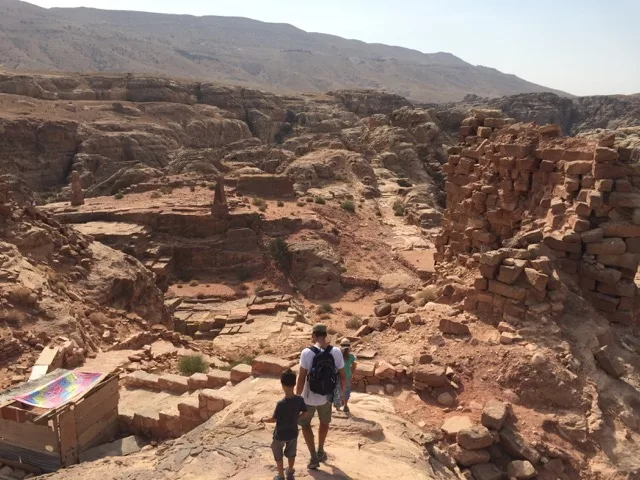
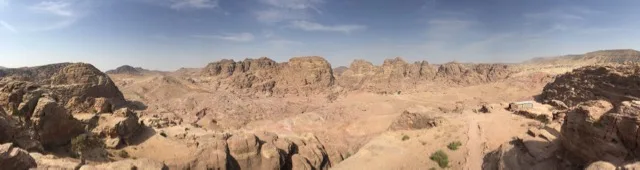
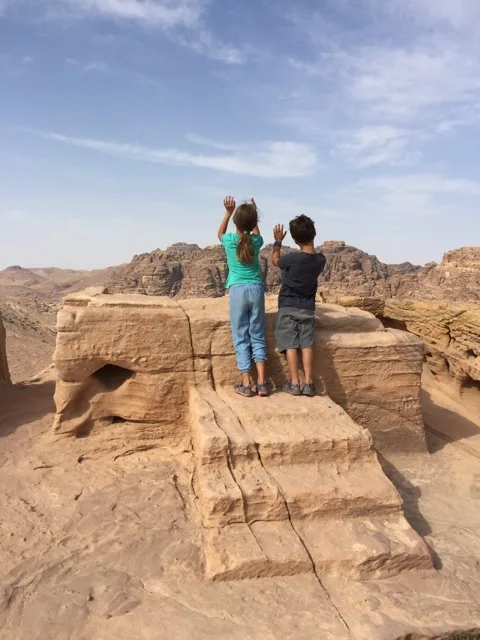
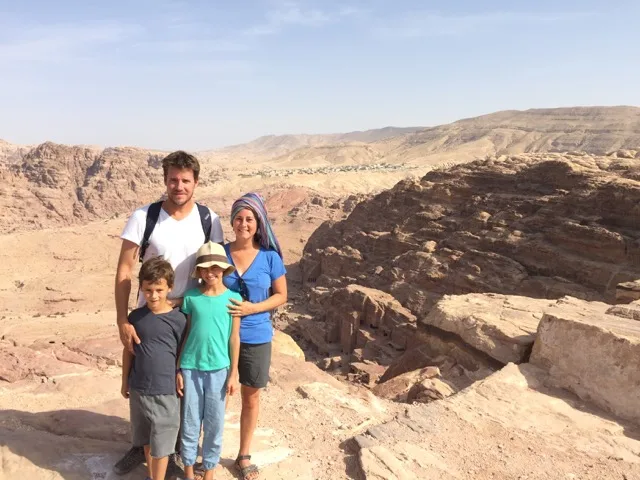
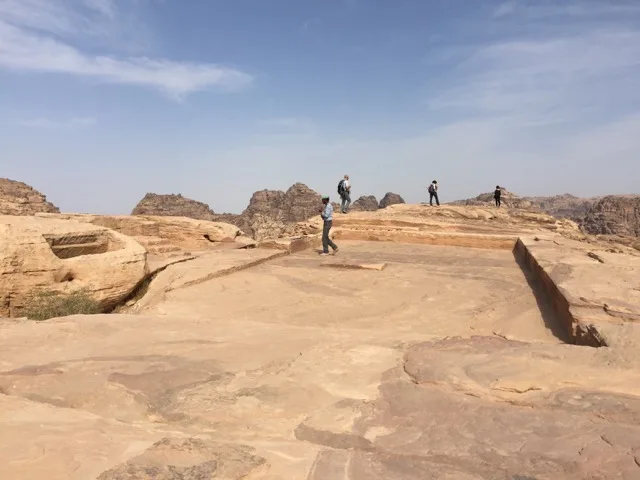
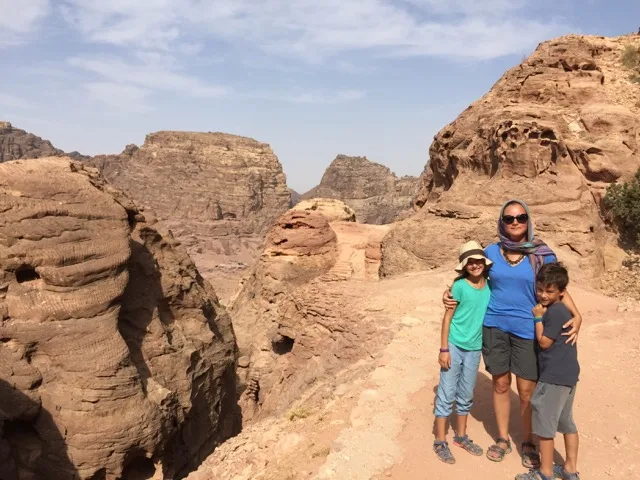
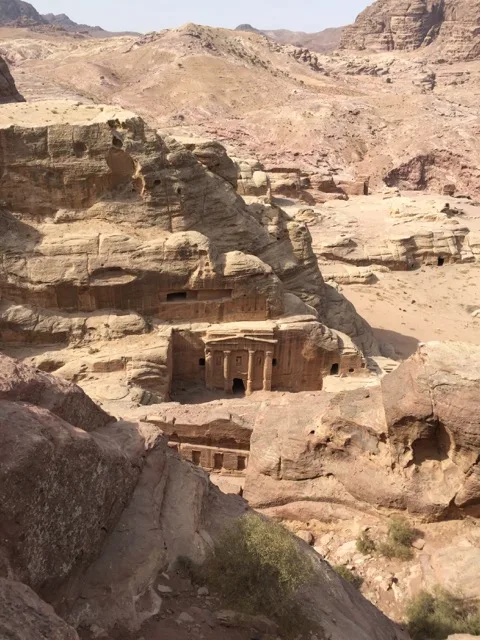
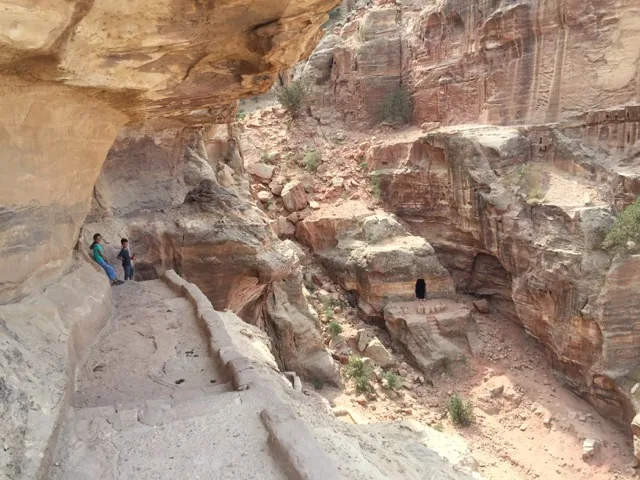
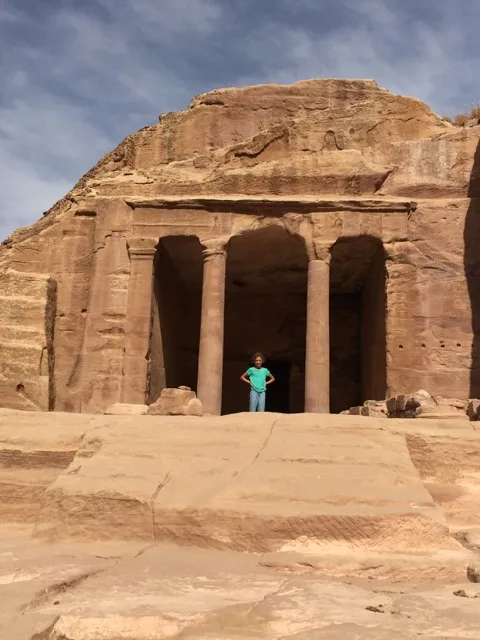
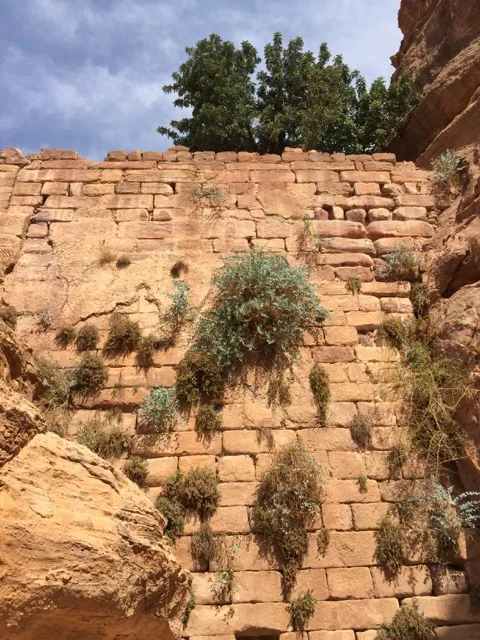
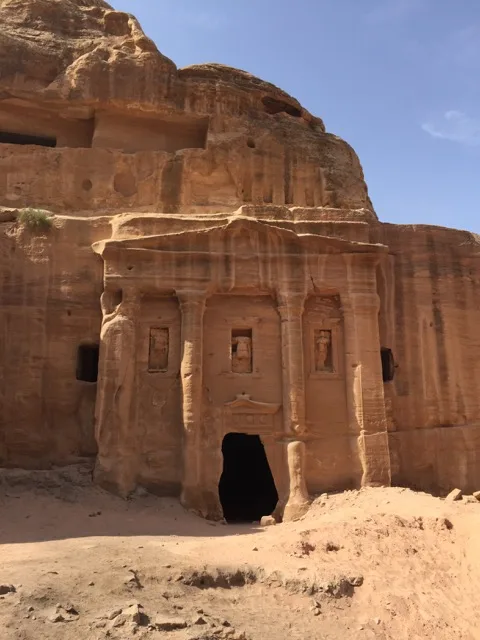
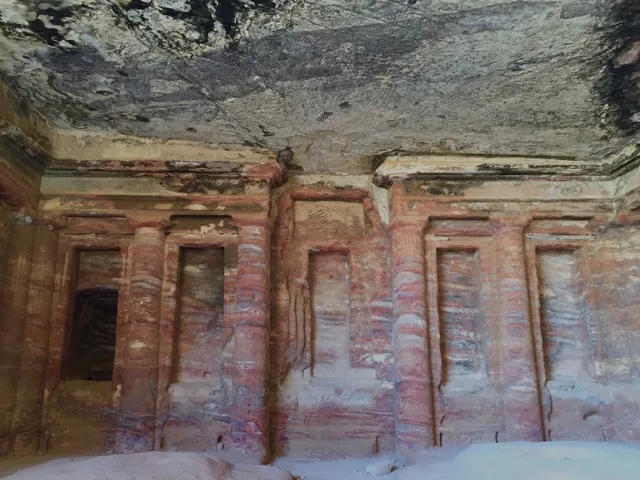
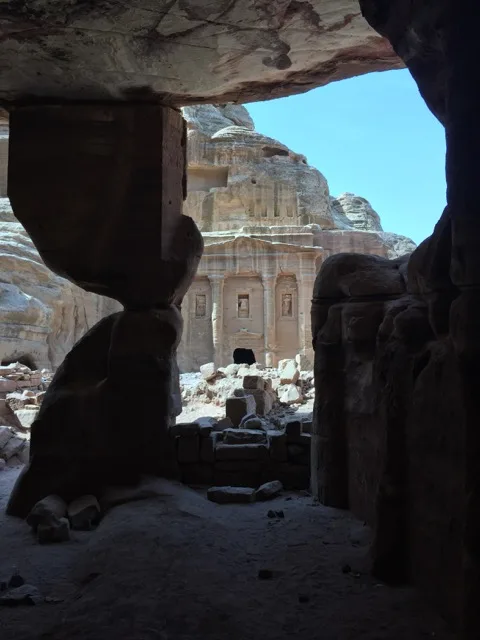
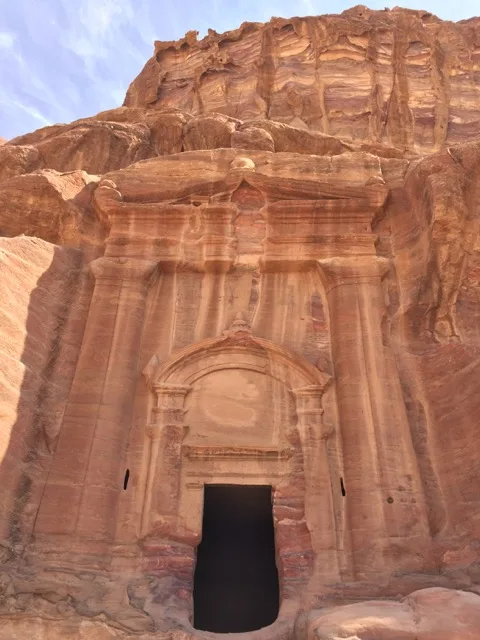
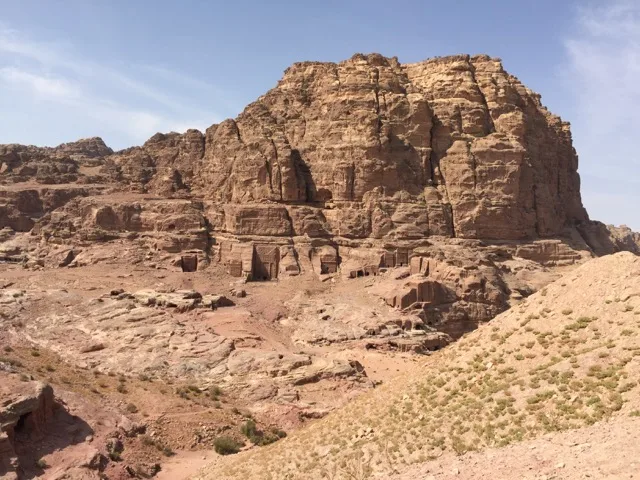
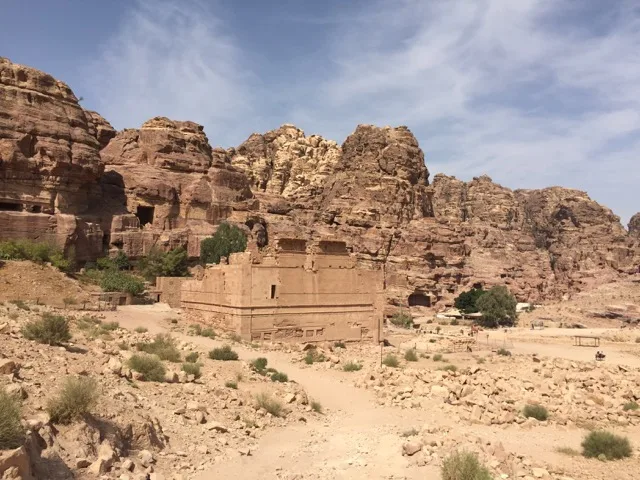
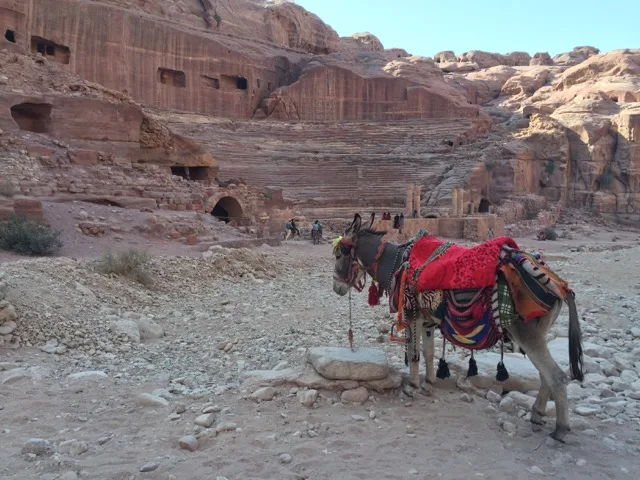
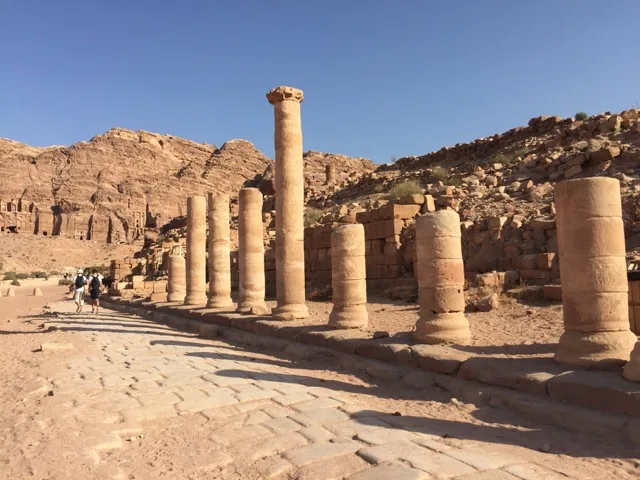
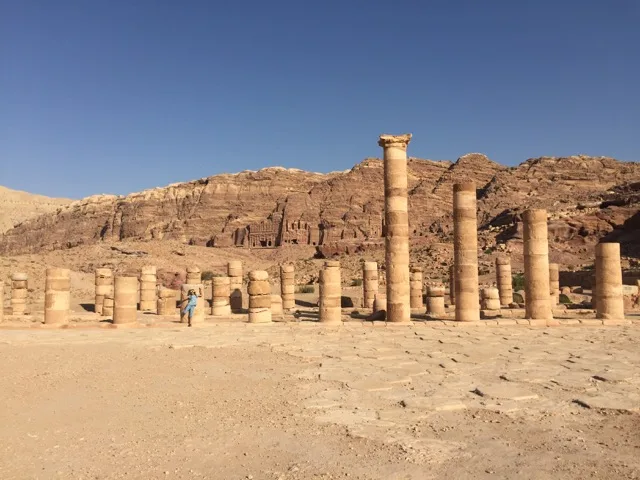
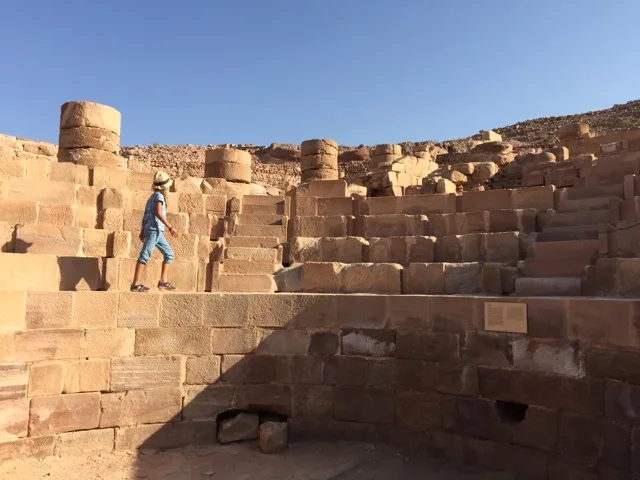
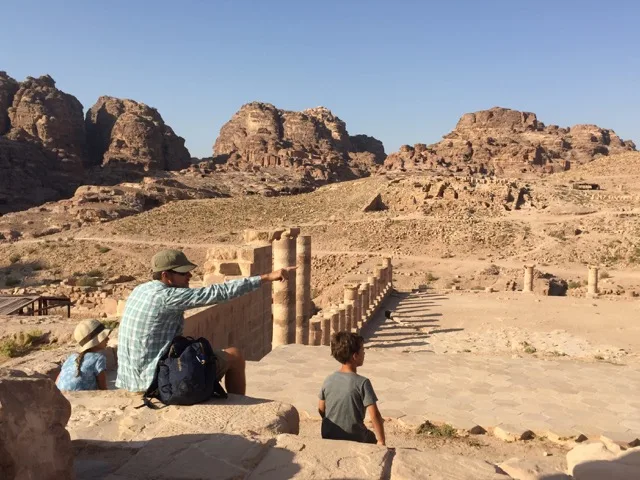
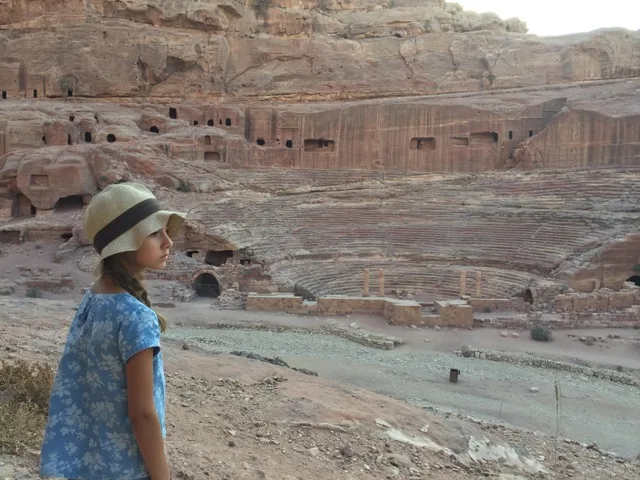
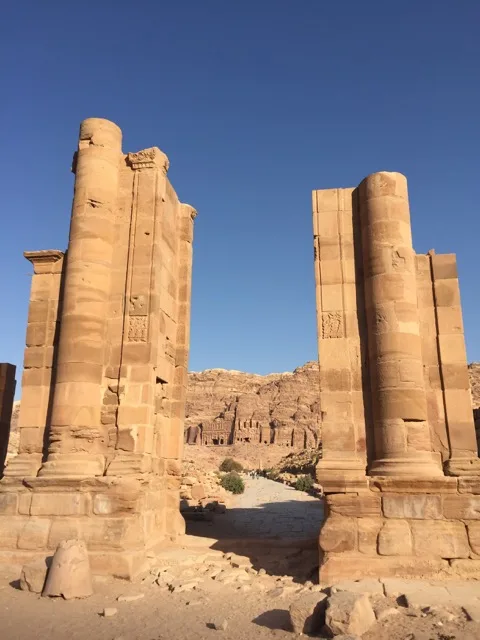
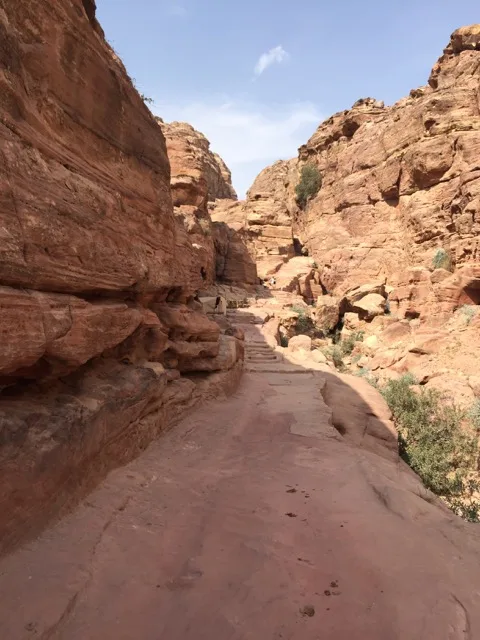
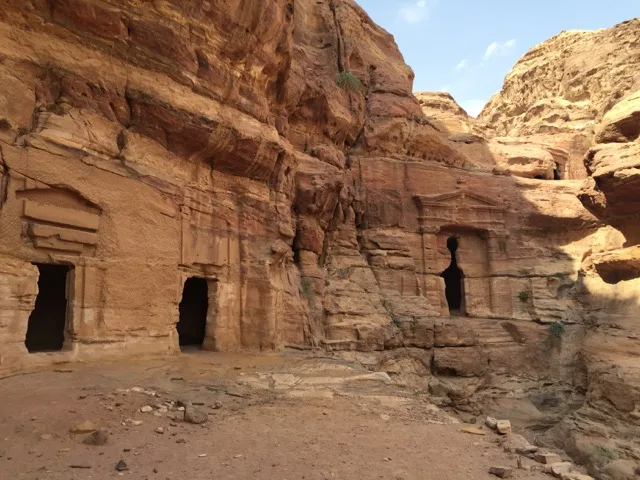

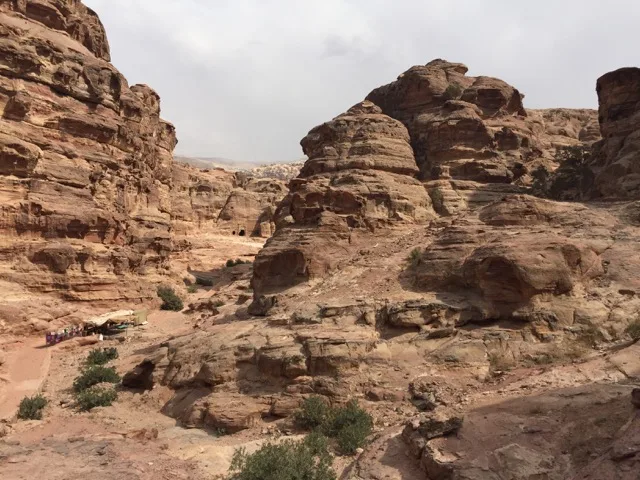
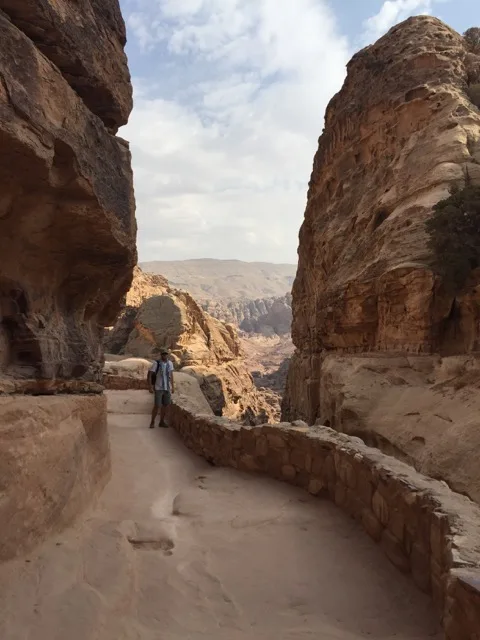
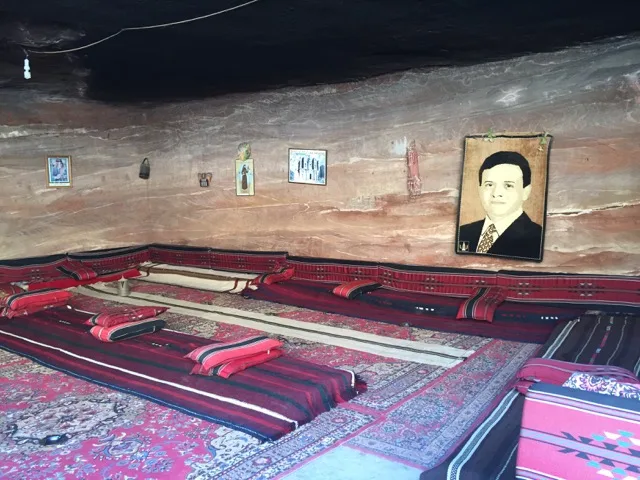
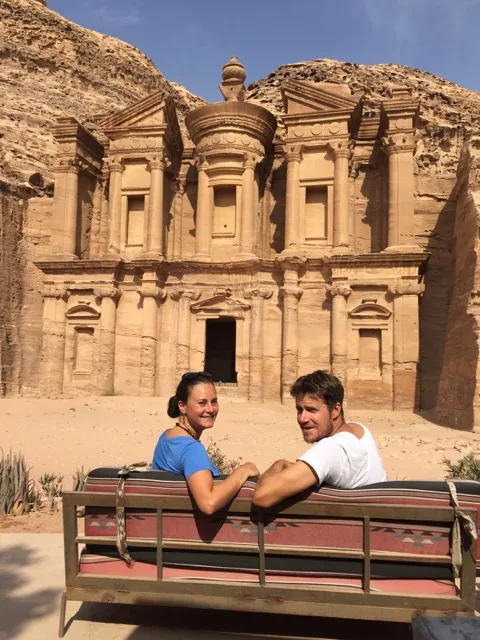
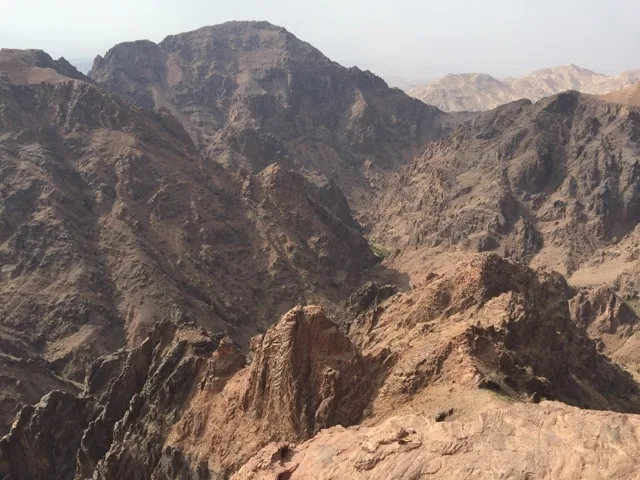
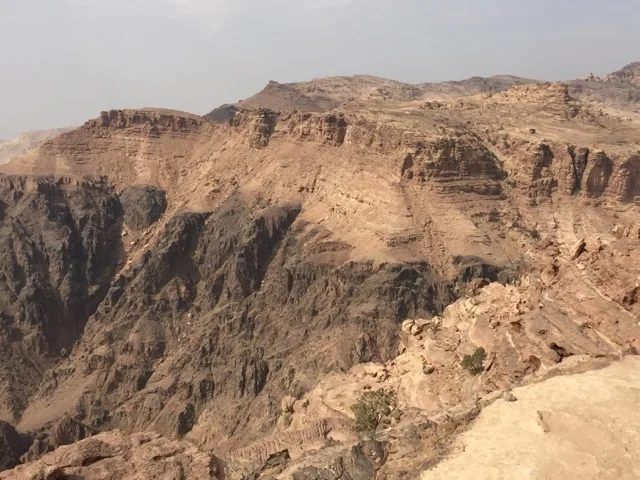
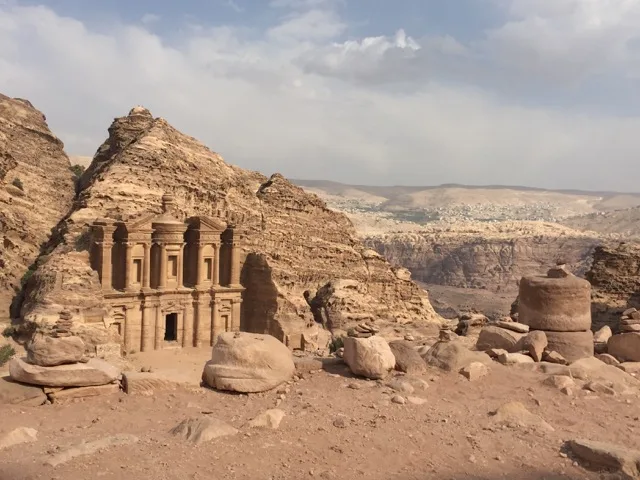
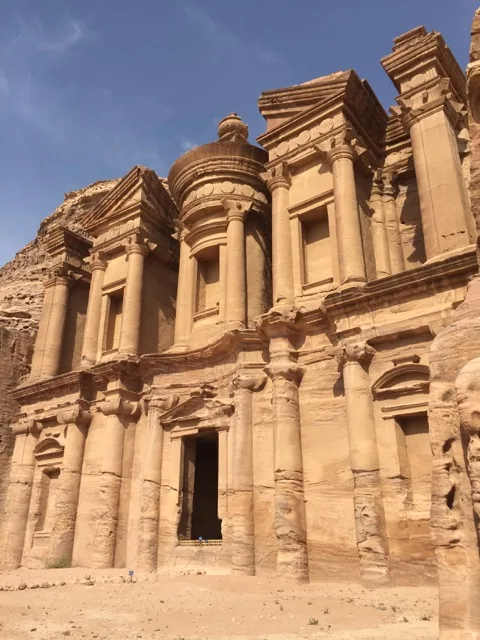
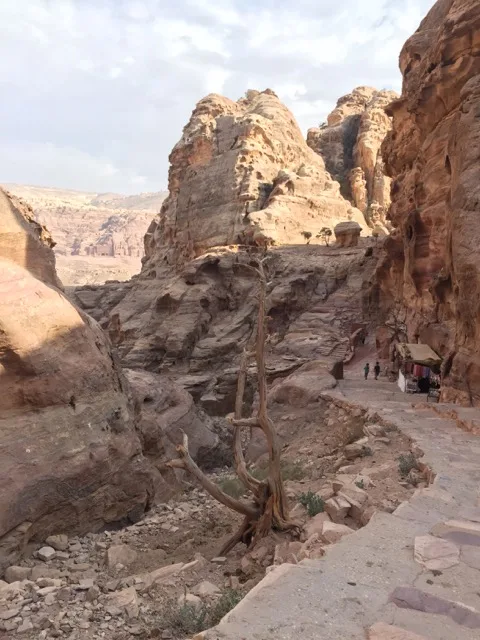
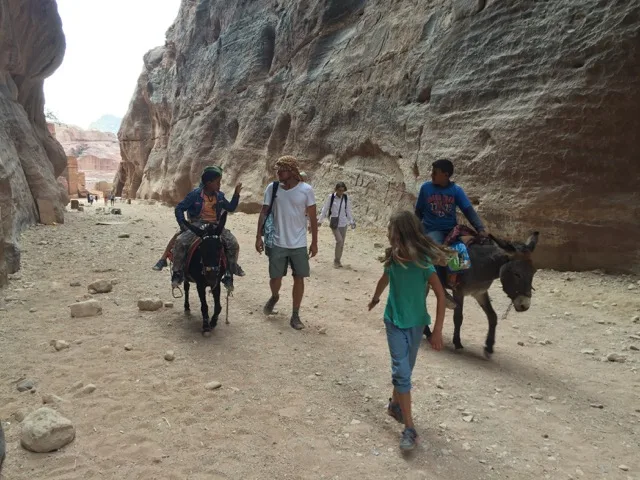
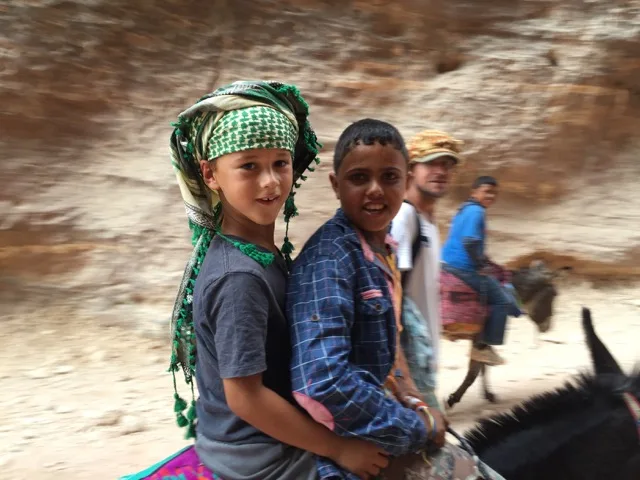
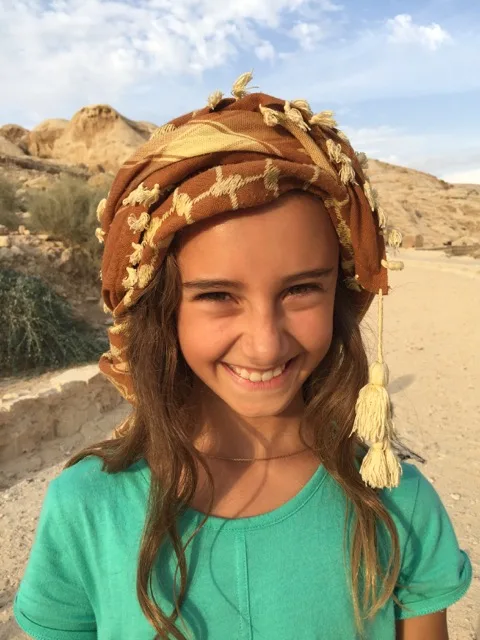
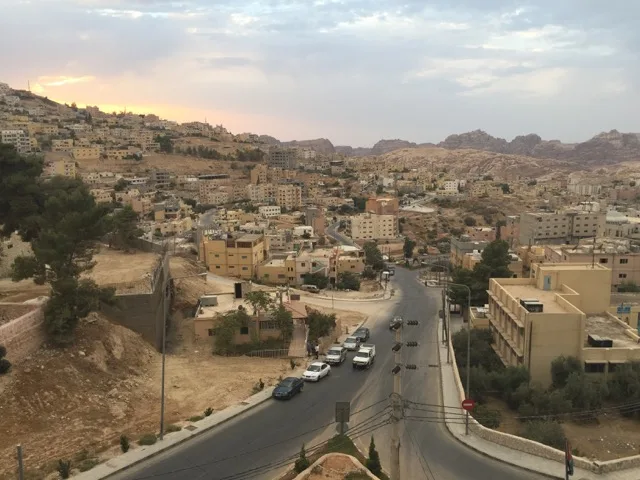
Just when you thought Wadi Rum was the zenith point in your Jordan trip, enters Petra, and your mind is blown. Wow. How can I put in words the mystery of Petra, and how the deeper you explore, the more intense the reward? I’ve been awed by photos of this famous prehistoric Nabataean caravan-city, a UNESCO site, for years; perhaps, starting with Hollywood exposure of the “treasury” in Indiana Jones. My imagination tried to flesh out what the vision would look like in its’ live entirety. I read multiple descriptions of an entry via a narrow canyon and learned that the area and its’ cave ruins were far greater than the popular poster images, but none of this could prepare me for reality. One of the things that makes the personal discovery of Petra so satisfying, is the physical effort required to explore this destination. As opposed to many sites, where you can drive right to the main attraction’s entrance, Petra is only reached after a long journey by foot, or an earthy ride atop a donkey, camel, or horse and carriage. From the visitor center you follow a dirt path that passes caves and carved Djinns (rectangular blocks the size of shacks, believed to be representative of gods). Your trail eventually narrows as you enter the siq, a 2 km. windy path through a red rock “canyon”, not carved out by water, but rather a seismic split in the bedrock. Here we delighted in the random carved niches and the brilliant aqueduct system carved into the interior sides, with traces of the original terracotta pipes. The walk is both silent and meditative, yet echoing with the clomps of animal hooves, wooden wheels, and foreign whispers. The air is acrid with the smell of dust and donkey piss. Looking up, looking down, looking all around, my head spins atop my body. Eventually, an architectural vision appears in the crack in front of you. A sliver of the wondrous Nabataean “treasury” lures you closer. The siq opens up to reveal a large natural plaza dominated by a finely detailed edifice with an interior room that has been carved right into the face of a sandstone cliff side. Here, tourists cluster amongst bedouin vendors and animal keepers, hawking you to ride a camel, or buy a silver trinket. You might now think that you have reached your final destination, but no, your journey has barely begun… Our family opted to spend two days visiting Petra as fully as we could. This involved an insane amount of walking, climbing and dusty heat. However, no complaints from me, as every hike to a “high place” was rewarded with altars, obelisks, elaborate temples, and ornate tombs, making every step a small offering. After the siq and the treasury, you enter another wider “canyon” that opens up to a valley of tombs. Looking up the mountain sides, you find ancient tomb after tomb carved into the high cliffs. Many of these tombs were once occupied by bedouins as their personal homes, before Jordan relocated the local Beduls into a settlement in the 80’s, and turned Petra into the government organized tourist site it now is. I was fascinated with the bedouins, who operated much of the commerce within Petra. These were not like the bedouin we encountered in wadi Rum, and appeared more like gypsies. Most of the men, women, and children wore heavy black kohl around their eyes, and many of the young men dashing across the canyon and valleys on horse, had a particular style of long and tangled hair, scarves, jewelry and heavy eyeliner, that was an exact match to Johnny Depp’s Jack Sparrow character in the Pirates of the Caribbean movies! My favorite spot had to be the Monastery. It feels like triumph to arrive at this destination, as you must cross the opening path from the visitor center, the siq to the treasury, the valley of the tombs, and the Roman theater & colonnaded road, then climb into the hills, up over 800 random rock carved steps, finally turning a corner into a large arena-like area with the massive Monastery looming before you. Here all is quiet, as fewer intrepid tourists catch their breath, and sit in a bedouin carpeted teahouse to relax and ponder all this magnificence. There is no place like it. Man is amazing. Possibilities for creativity, resourcefulness, and grandeur are unlimited in our world, as the Nabataeans have proved with these masterpieces. I encourage you to run to Petra and see it for yourself!